AEO for E-Commerce: How to Get Your Products Recommended by AI Search
Key Takeaways
- When someone asks ChatGPT or Google AI “what’s the best running shoe for flat feet,” the brands that get recommended are the ones whose product pages are structured for AI extraction. If your product data lives in images and JavaScript, AI systems can’t read it.
- E-commerce sites with Product, FAQ, and Review schema see measurably higher AI citation rates. The structured data acts as a machine-readable product brief that AI models can synthesize into recommendations.
- AI search traffic converts at 14.2% compared to 2.8% for Google organic. These users arrive with higher intent because they’ve already gotten the general answer from AI and are clicking through to buy.
- The biggest AEO opportunity for e-commerce is in product comparison and category-level queries, where AI is actively recommending specific brands and products.
AEO for E-Commerce: How to Get Your Products Recommended by AI
AI search is changing how people find products. Instead of scrolling through 10 blue links on Google, a growing number of shoppers are asking ChatGPT, Perplexity, or Google AI Overviews which product to buy. The AI gives a direct recommendation, often naming specific brands, and the user either clicks through to purchase or trusts the recommendation and searches for that brand directly.
If your products aren’t part of that recommendation, you’re invisible at the moment of highest purchase intent.
Shopify’s research on AEO for e-commerce confirms the shift: AI platforms are now a product discovery channel, and the brands winning citations are the ones with structured, extractable product data.
Why Traditional E-Commerce SEO Falls Short for AI Citation
Traditional e-commerce SEO focuses on product page rankings, category page authority, and backlink profiles. Those still matter for organic traffic. They don’t determine whether ChatGPT recommends your product.
AI systems pull product recommendations from content they can parse and synthesize. A product page with specs embedded in images, prices rendered by JavaScript, and reviews loaded dynamically gives AI crawlers nothing to work with.
The product pages that get cited share common structural elements: plain-text product descriptions with specific use cases, JSON-LD Product schema with price, availability, and aggregate ratings, comparison content that positions the product against alternatives, and FAQ sections answering the exact questions shoppers ask before buying.
| Evidence layer | Put this in the page | Best machine-readable home | Why it helps |
|---|---|---|---|
| Product facts | Price, availability, variants, dimensions | Visible HTML plus Product and Offer schema | Lets a system compare the product without guessing |
| Use-case fit | Who it suits, constraints, budget, environment | Category page or buying guide | Matches best product for a specific need questions |
| Evidence | Rating count, review themes, test method | Review summary and AggregateRating where valid | Adds proof behind the recommendation |
| Comparison | Alternatives, tradeoffs, clear differentiators | Owned comparison table | Creates a direct citation surface |
| Operations | Shipping, returns, stock, warranty | Visible policy text and Offer data | Keeps transactional answers accurate |
Use visible text and valid schema together. Structured data must agree with what a shopper can see.
The Four AEO Priorities for E-Commerce Sites
1. Product Schema That Goes Beyond the Basics
Most e-commerce platforms auto-generate basic Product schema. That’s a start, but it’s not enough for AI citation. Expand your structured data to include material composition, shipping details, size/fit information, comparison attributes, and aggregate review data with specific counts.
The more specific and complete your structured data, the more context AI models have when deciding whether to recommend your product. A Product schema entry with 20 populated fields beats one with 6.
2. Category Pages That Answer “Best X for Y” Queries
This is where the biggest AEO opportunity sits for e-commerce. When someone asks AI “what’s the best espresso machine under $500,” the AI constructs a recommendation from content that directly addresses that question.
Build category pages and buying guides that target these queries explicitly. Structure them as clear question-and-answer pairs with specific product recommendations, price points, and use-case matching. Include FAQ schema so the content is extractable.
3. Review and Comparison Content You Own
Right now, when AI recommends products, it often cites third-party review sites like Wirecutter, RTINGS, or niche blogs. If you don’t have comparison content on your own domain, you’re handing the citation to someone else.
Create honest comparison pages on your own site. “Product A vs Product B: Which Is Right for You?” content structured with clear differentiators, use-case recommendations, and specific data points gives AI something to cite from your domain rather than a third party’s.
4. Keep Your HTML Light
E-commerce pages are notorious for heavy HTML. Inline CSS from theme builders, JavaScript-rendered content, massive product image carousels with base64 encoding. If your product page HTML exceeds 1 MB, your FAQ section and schema markup at the bottom may get truncated by Google’s 2 MB crawl limit before AI systems ever see them.
Externalize your CSS and JS. Lazy-load below-fold content. Move your FAQ and Product schema higher in the DOM. Every kilobyte of bloat pushes your most citable content further from the crawler’s reach.
Measuring E-Commerce AEO Success
Traditional SEO metrics don’t capture AI citation performance. You need a “share of citation” metric: for your key product categories, how often does AI recommend your brand versus competitors?
Run monthly queries across ChatGPT, Perplexity, and Google AI Overviews using the questions your customers actually ask. Track which brands get mentioned, which products get recommended, and which source URLs get cited. Over time, your optimization efforts should shift your share of citation upward.
The conversion data backs this up. AI search traffic converts at 14.2% compared to 2.8% for traditional organic. Each citation you win represents significantly higher-value traffic.
Want to know how your product pages stack up for AI citation? Send me your store URL and I’ll run a citation audit against your top product categories. You’ll see exactly where you’re being cited, where competitors are winning, and what to fix first.
Frequently Asked Questions
Does AEO replace traditional e-commerce SEO?
No. Traditional SEO still drives the majority of organic e-commerce traffic. AEO is an additional layer that captures the growing segment of shoppers using AI to find products. The two work together. A page needs to be indexed and authoritative (SEO) and structured for extraction (AEO) to perform across both channels.
Which e-commerce platform handles AEO best?
Shopify has the most native support for Product schema and structured data. WooCommerce and BigCommerce both support it through plugins. The platform matters less than the implementation. Any platform can be optimized for AI citation with proper schema markup and content structure. Reach out for a platform-specific audit.
How long does it take to start appearing in AI recommendations?
It depends on your existing domain authority and content quality. Sites with strong existing SEO signals can see AI citation improvements within 4-6 weeks of implementing schema and content restructuring. Newer or lower-authority sites typically need 2-4 months of consistent optimization. The initial citation audit identifies your starting position and realistic timeline.
What products benefit most from AEO?
Products in research-heavy categories where buyers compare options before purchasing. Electronics, outdoor gear, skincare, home appliances, and specialty food/drink see the highest AI recommendation activity. Commodity products with low differentiation see less AI citation activity because there’s less for the model to recommend specifically. Learn more about our AEO services.
See what ChatGPT is really searching
SubSeed captures the hidden Google queries ChatGPT runs behind every answer and enriches them with search volume, CPC, and keyword difficulty.
Related Posts

Read this post with an assistant
This is the whole prompt each button sends. Nothing hidden in it.
Read https://gridlok.co/blog/aeo-for-ecommerce/ and give me the main points in a few sentences.
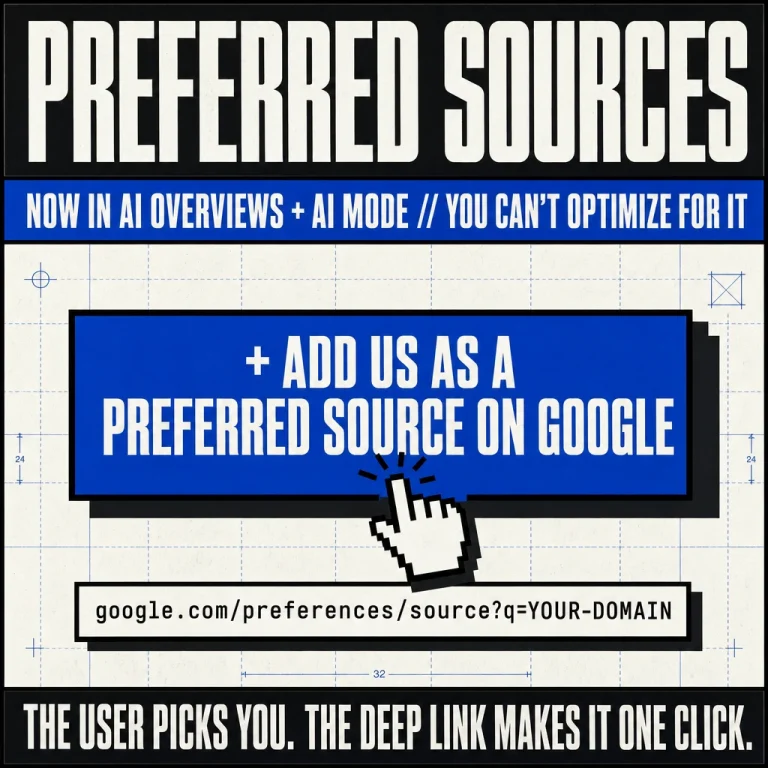
Make Gridlok a Preferred Source on Google
See Gridlok surfaced more often in your Top Stories, AI Overviews, and AI Mode. One click, applied across Google Search.