Structured Data for AI: The Schema That Makes Your Site Machine-Readable
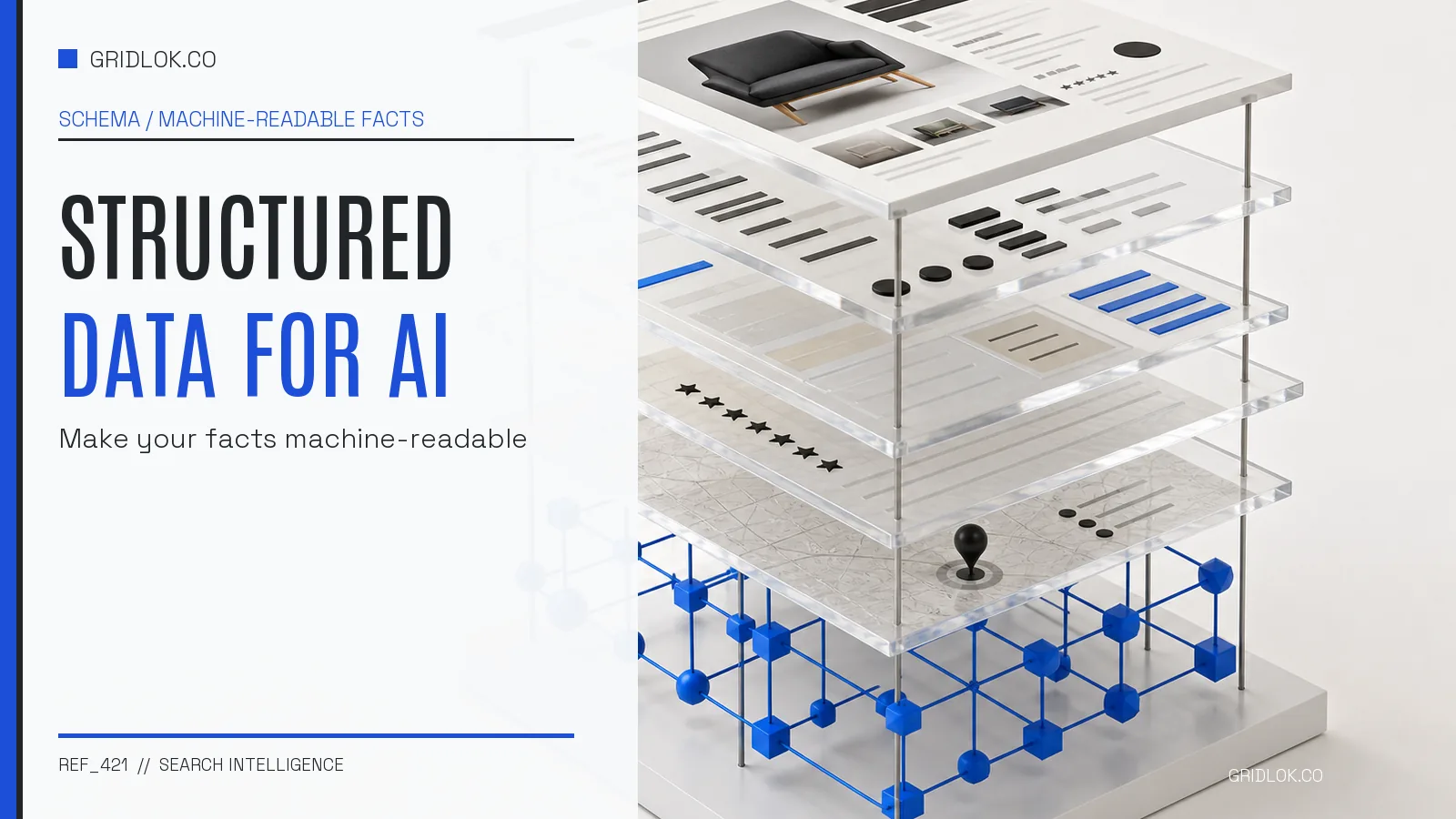
Structured data is how you tell a machine, in its own language, exactly what your page says: this is the price, these are the hours, this is the answer to that question.
It mattered for search. It matters more for AI, because an answer engine or an agent leans on explicit facts rather than reading between the lines. Here is what structured data does for AI and which types are worth your time.
Key takeaways
- Structured data (schema markup) states your facts in a format AI and search engines can read without guessing.
- AI answers and agents favor explicit, machine-readable facts, so good schema makes you easier to quote and act on.
- A few types do most of the work: Organization, Product, FAQ, and LocalBusiness.
- It is one of the highest-impact, lowest-effort moves for AI readiness.
What is structured data?
Structured data is a small block of code, usually JSON-LD, that labels the information on your page. Instead of hoping a machine infers that “$49” is your price and “Mon to Fri” is your hours, you state it plainly in a format built for machines.
Search engines have used it for years to build rich results. AI systems use it to read your facts with confidence, which is exactly what you want when an agent is deciding whether to trust and use your page.
Why structured data matters more for AI
A human reads context. They see a number near a product and understand it is the price. AI is getting better at this, but it still does best when the facts are explicit.
When an answer engine quotes a price or an agent checks availability, structured data is the difference between a confident, correct answer and a guess it might skip. Clean schema makes you the safe source to quote.
The schema types that matter most
You do not need every type. A focused set covers most businesses:
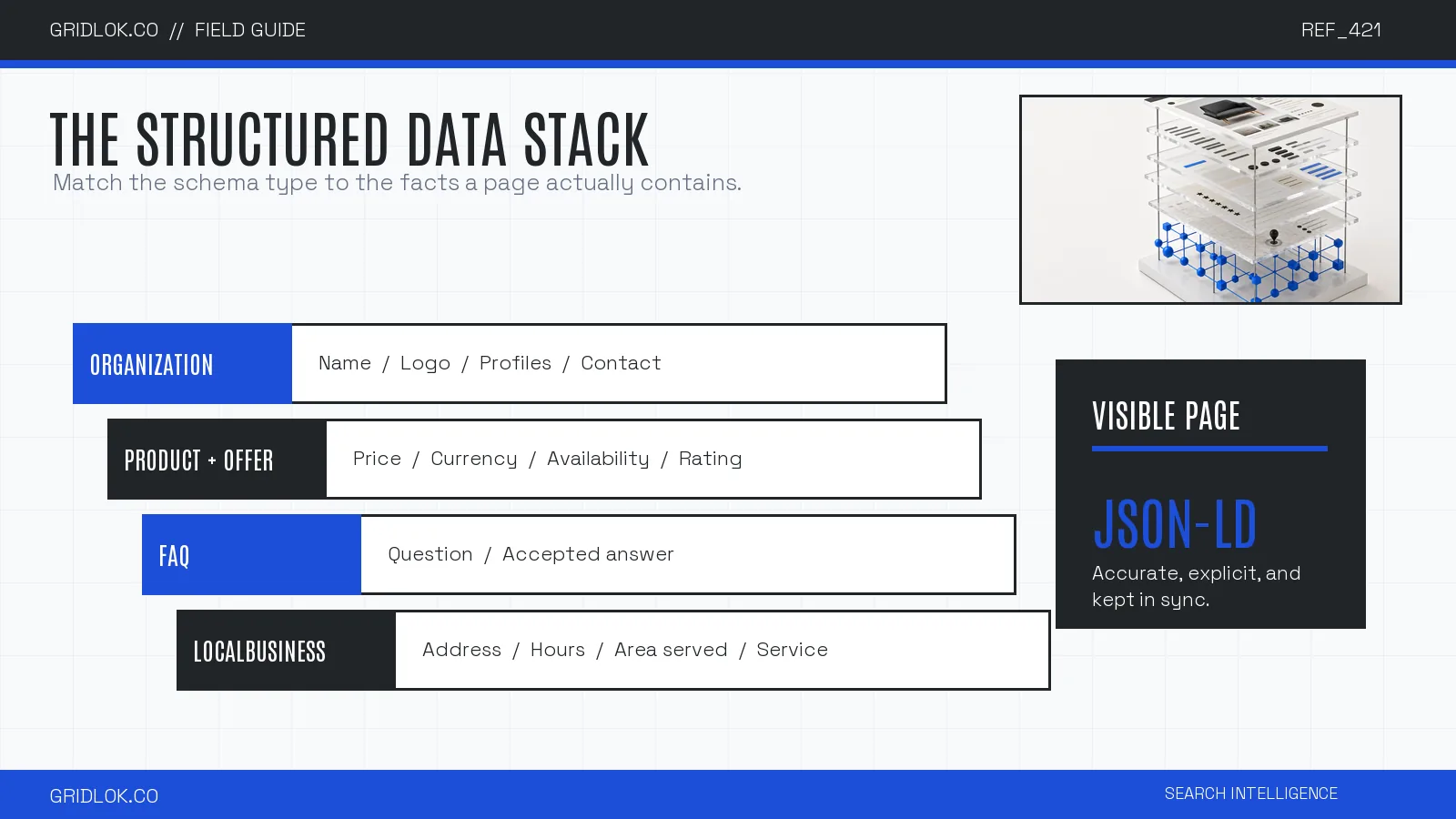
- Organization: who you are, your name, logo, and profiles, so AI connects your brand correctly.
- Product: price, availability, and reviews, the facts a shopping agent reads first.
- FAQ: question-and-answer pairs that map directly to how people ask AI.
- LocalBusiness: hours, location, and services, the basics a local agent needs to recommend or book you.
How to add structured data
- Pick the types that fit your pages, starting with Organization site-wide and Product or LocalBusiness where they apply.
- Add the markup as JSON-LD, the format Google recommends and the easiest to maintain.
- Keep it accurate and in sync with the visible page. Schema that disagrees with the page hurts more than it helps.
- Validate it with a structured-data testing tool, then confirm an AI reads it correctly.
| Schema type | Use it when the page contains | High-value fields | Do not do this |
|---|---|---|---|
| Organization | Brand identity and official profiles | name, url, logo, sameAs, contactPoint | Invent profiles or use page-specific facts |
| Product plus Offer | A real product and purchasable offer | name, sku, price, currency, availability | Mark up hidden or expired offers |
| FAQPage | Visible question and answer content | mainEntity with acceptedAnswer | Add answers that users cannot see |
| LocalBusiness | A physical or service-area business | address, hours, telephone, areaServed | Use a subtype that does not fit |
Schema is a claim about visible page content. Accuracy and agreement matter more than the number of types installed.
Where this fits
Structured data is the facts layer of AI readiness. Access lets an agent in, structured data tells it what is true, and content and actions do the rest. For the full picture, see AI readiness: is your business ready for AI agents.
And if you want an agent to act on those facts, not just read them, that is the action layer: WebMCP.
FAQ
Structured data is among the cheapest, most durable AI-readiness moves you can make. It turns your facts into something a machine can use with confidence.
To see whether AI reads your pages and facts correctly today, run the Agentic Readiness Check.
See what ChatGPT is really searching
SubSeed captures the hidden Google queries ChatGPT runs behind every answer and enriches them with search volume, CPC, and keyword difficulty.
Related Posts

Read this post with an assistant
This is the whole prompt each button sends. Nothing hidden in it.
Read https://gridlok.co/blog/structured-data-for-ai/ and give me the main points in a few sentences.
Make Gridlok a Preferred Source on Google
See Gridlok surfaced more often in your Top Stories, AI Overviews, and AI Mode. One click, applied across Google Search.