ChatGPT Shopping and Gmail Offers: What Merchants Should Prepare
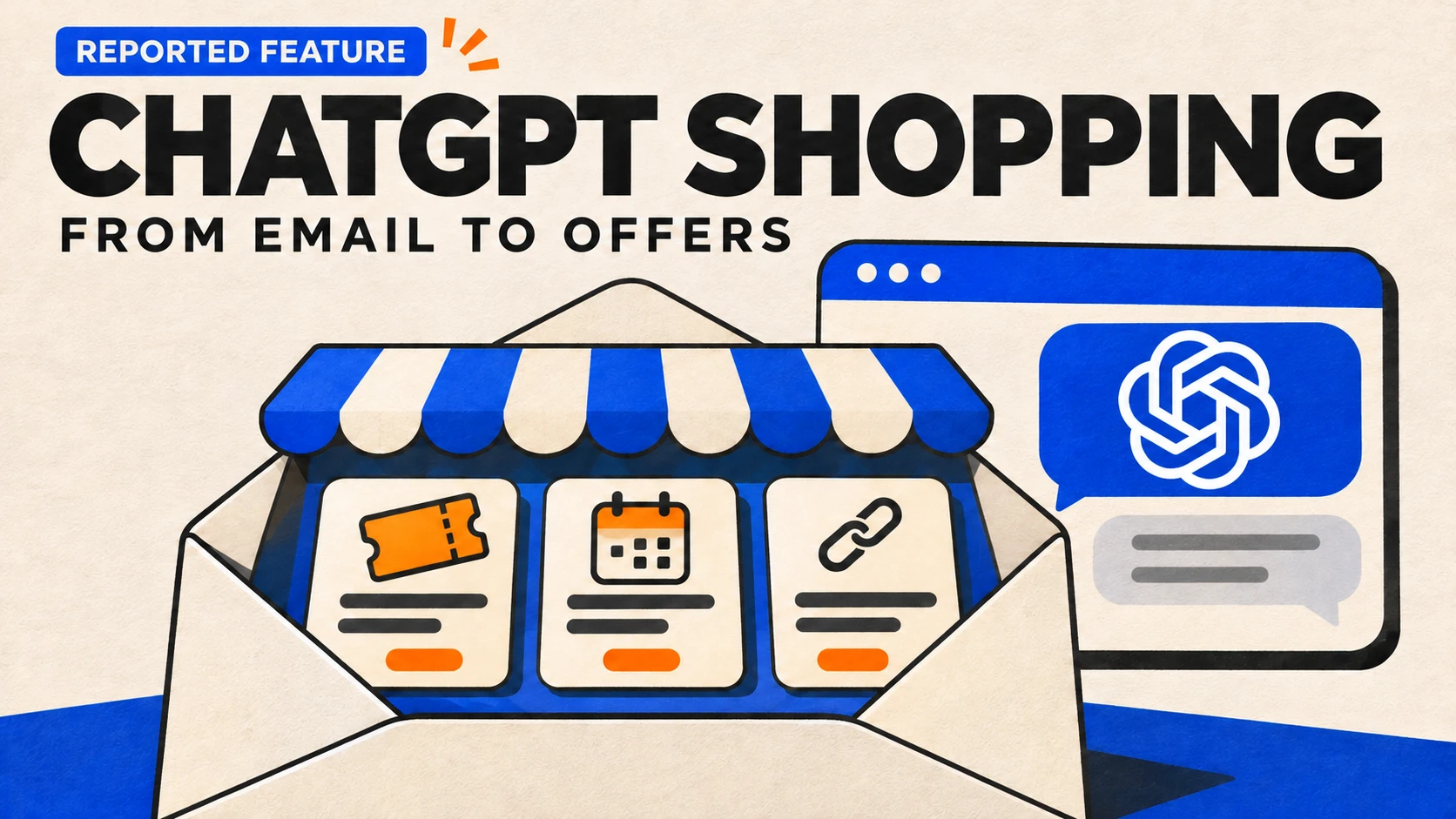
ChatGPT shopping could give promotional email its own place to be seen. RuntimeWire reports a gated Gmail “Email offers” tab in the Windows app package. For merchants, the useful work starts with the offer itself: the email, product page, feed, and checkout should agree on what someone can buy and what they will pay.
The reported tab has no confirmed public launch date as of November 5, 2026. OpenAI already documents other shopping tools, including product feeds, a Promotions API, and checkout plugins. Each has a different job.
What is the reported ChatGPT Gmail offers feature?
RuntimeWire’s November 4 investigation, updated November 5 describes an inbox-offer interface in Windows package 26.1029.7803.0. The reported cards can include a code, expiry date, retailer link, and a link to the original email, alongside a warning that the email-sourced offer is unverified.
The report describes feature gates around the shopping route and sidebar entry. Its evidence is a static inspection of packaged client code. That establishes an implemented interface, with public rollout and backend behavior still unconfirmed.
For an email team, the possible change is straightforward. A promotion could be read and summarized outside the layout you designed. The code, dates, exclusions, and destination would still need to make sense when separated from the artwork.
How does this fit with existing ChatGPT shopping?
Start by naming the route you are preparing for. A catalog integration supplies product information. A checkout integration handles a purchase action. The Gmail tab described in the report starts with a connected inbox.
| Route | Evidence and purpose | Merchant action |
|---|---|---|
| Gmail Email offers | Reported, gated client interface for inbox promotions. | Keep email offer text, terms, and destination clear. Public access remains unconfirmed. |
| Shopping product results | Documented product results with images, details, and merchant links. | Keep catalog information and product pages current. |
| Direct product feed | Documented partner onboarding for structured catalog uploads. | Apply for access and validate the production feed. |
| Structured promotions | Documented Promotions API for offers associated with a feed. | Supply promotion details, benefits, and active periods through the supported integration. |
| Checkout plugin | Approved-partner beta for opening an inline checkout experience. | Plan the merchant-side tools and checkout interface as a separate integration. |
OpenAI says shopping product results are selected independently and ads are separate. A product being listed, a promotion being submitted, and a shopper completing checkout are different events. Keep those distinctions in your reporting too.
The broader source paths are covered in Gridlok’s ChatGPT Intelligent UI article. For this work, name the product and route before assigning a task to the email, development, or paid media team.
Will a coupon from an email actually work?
An email gives a code an identifiable source. Whether it works still depends on its dates, eligible products, customer restrictions, and checkout rules. Existing coupon studies show why that distinction deserves attention.
| Study | Scope and timing | Result and interpretation |
|---|---|---|
| Coupons.com | Prompts for 101 US retailers; codes manually checked August 4–7, 2026. | 24.5% of reliably testable returned codes worked. The study excluded 46% of returned codes because conditions prevented reliable testing. |
| SimplyCodes | 35,398 returned codes compared with recorded promotions, plus a manual audit; collected August 2026. | Reported an adjusted 59% failure rate. Database coverage and the audit are part of that estimate. |
Both studies were published by coupon businesses. They measured AI-suggested codes under their stated methods. Their percentages should stay attached to those methods; neither result measures the reported Gmail interface.
For your own promotion, test the exact code with an eligible basket and with an excluded item. Check what the shopper sees in each case. An accurate rejection message can explain a minimum spend or a customer restriction before someone abandons the purchase.
What should merchants prepare for ChatGPT shopping?
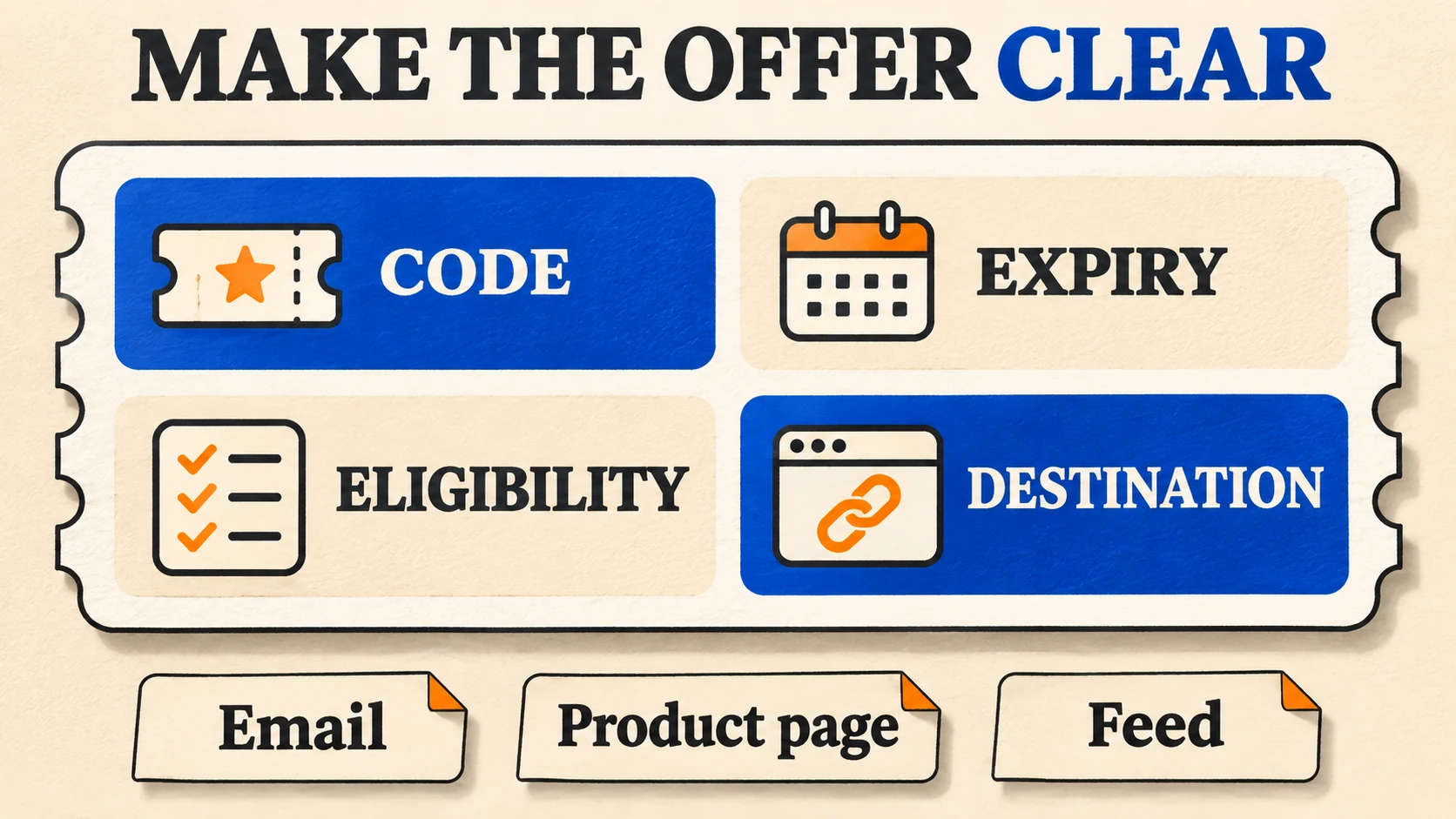
Write the complete offer in the email body
Put the code, discount, expiry with time zone, minimum spend, and major exclusions into readable text. Keep the product name and destination link close to the offer. Someone reading with images turned off should still understand how to use it.
A clear body also helps someone forwarding the email, using a screen reader, or checking the details on a phone.
Make the landing page answer the same questions
Use a descriptive URL, page title, and H1 that identify the product or promotion. Give terms a clear section heading, write an accurate meta description, and add useful alt text to product images. Link the offer to its eligible products and the relevant shipping or returns information.
Put those details in the page text. A sale banner should not carry the only copy of an expiry date. Check the initial HTML as well as the browser view, particularly when a JavaScript storefront supplies most of the page. Gridlok’s HTML-shell guide explains that check.
Refresh the catalog when the offer changes
OpenAI’s current product feed schema includes product identifiers, names, descriptions, URLs, brand and seller names, images, stock status, and price. Keep each purchasable variant consistent with its own destination and current details.
The schema has a separate sale_price. Its compatibility notes say uploaded sale-window, expiry, and availability dates do not schedule price or stock changes. Update the current values when the sale starts, finishes, or sells out.
For a connected direct feed, OpenAI’s onboarding guide recommends a full snapshot at least daily. A short promotion can change faster than that. Assign someone to the start and end updates, and check the submitted values against the storefront.
Keep structured promotions and checkout aligned
The Promotions API has its own active period, including start_time and end_time, alongside promotion benefits. Keep that promotion record aligned with the email and checkout rules. A field in one system does not automatically update the others.
For developers implementing checkout conversion plugins, OpenAI documents a beta for approved partners. Catalog discovery and the checkout action require separate work. Scope the checkout tools, authentication, and purchase experience explicitly when planning that integration.
Compare one promotion across your channels
Promotion record comparison
Copy the approved promotion into the first row, then add the values shown in your email, landing page, checkout and promotion record. The comparison identifies differences in the code, minimum spend, currency, expiry and destination.
See example rows
location,code,minimum,currency,expires_at,url
Approved,DEMO20,50.00,USD,2026-11-28T23:59:00-05:00,https://example.com/sale/
Email,DEMO20,50.00,USD,2026-11-29T04:59:00Z,https://example.com/sale/?utm_source=email
Checkout,DEMO20,75.00,USD,2026-11-29T04:59:00Z,https://example.com/sale/
The example contains a different checkout minimum. Its two expiry formats describe the same moment.
Records stay in this browser. The report includes mismatches and basket amounts to test around the approved minimum. Test product exclusions, customer eligibility and the final total in your live checkout.
What does connecting Gmail mean for shopping privacy?
OpenAI’s Google app data-controls FAQ says access follows the permissions granted to the connection. With Memory enabled, eligible connected information can help personalize ChatGPT, subject to its settings and Google-specific restrictions.
The FAQ states limits on training generalized models with directly connected Google data or its derivatives, and on using that data to target or serve ads. It lists exceptions involving feedback, manually supplied data, or information included in a response.
If “Improve the model for everyone” is off, the FAQ says app data is not used to improve models even when it appears in a conversation.
Disconnecting the Google app, deleting a chat, and removing saved memories are separate controls. Disconnecting does not automatically erase existing conversations or memories. The reported offers interface supplies no confirmed server-side retention policy for extracted offer data.
Check a connected account’s permissions before enabling an inbox workflow. For a shared business account, include the people responsible for customer data and workspace access in that decision.
Frequently asked questions
RuntimeWire reports a gated implementation in a Windows package. Public availability, eligible accounts, and a launch date remain unconfirmed as of November 5, 2026.
The reported inbox tab and OpenAI’s documented checkout plugins are separate features. Checkout plugins are approved-partner beta integrations for purchase actions.
Use a dedicated page when the promotion needs its own explanation or eligible-product collection. A simple offer may fit on an existing product page. Keep the terms readable, the destination accurate, and expired promotions clearly updated.
A feed supplies catalog information. ChatGPT selects products according to the question, context, and available information. Treat accurate data as maintenance work rather than a promised recommendation.
The studies measured AI-suggested codes under separate testing methods. Their results do not establish the accuracy of the reported Gmail offers tab.
Compare the records for one current promotion above. Fix disagreements between the email, page, catalog, and checkout, then assign the updates needed when the offer ends.
Is ChatGPT showing an old price?
Send Jim the product URL and the offer that should be live. We can review your product page, catalog feed, and promotion setup together.
Talk to Jim about product dataFor the wider citation picture, see Gridlok’s study of 407 Google AI Overview citations.
Updated November 5, 2026.
See what ChatGPT is really searching
SubSeed captures the hidden Google queries ChatGPT runs behind every answer and enriches them with search volume, CPC, and keyword difficulty.
Related Posts
Read this post with an assistant
This is the whole prompt each button sends. Nothing hidden in it.
Read https://gridlok.co/blog/chatgpt-shopping-gmail-offers/ and give me the main points in a few sentences.
Make Gridlok a Preferred Source on Google
See Gridlok surfaced more often in your Top Stories, AI Overviews, and AI Mode. One click, applied across Google Search.