What Happened to Project Mariner? Google’s Browser Agent, Explained
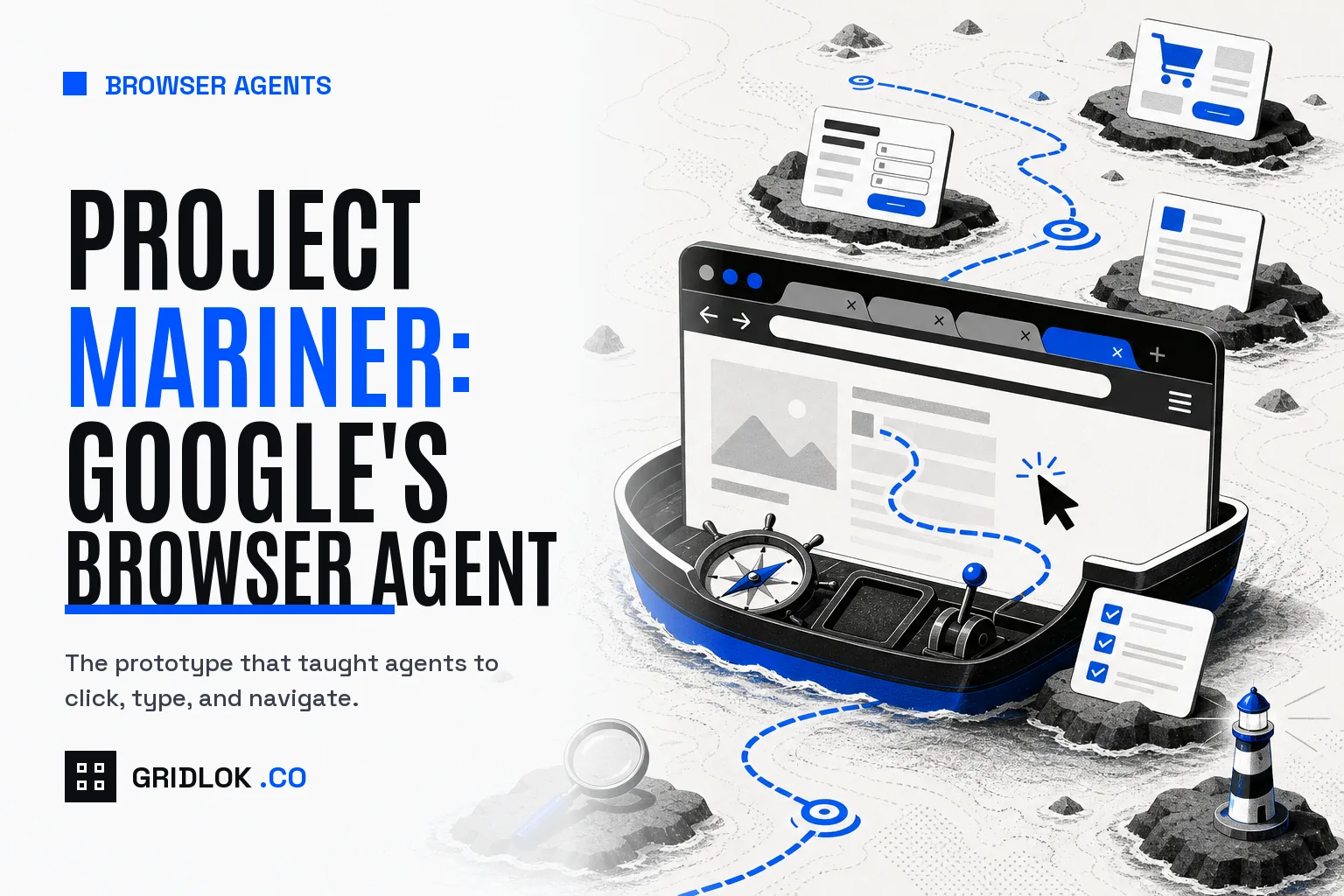
Project Mariner was Google’s experiment in an AI agent that used the web the way a person does, clicking through sites, filling forms, and finishing tasks. If you are searching for it now, you may have noticed it is gone as its own product.
Here is what Mariner was, what it could do, and where it went, because the short answer is that it did not really die. It moved.
Key takeaways
- Project Mariner was an experimental Google agent that navigated websites for you, clicking, typing, and completing tasks from a single instruction.
- It could run several tasks at once, like finding a flight and booking it while doing other research.
- Google wound it down as a standalone product in 2026, according to reporting, and folded its technology into the main Gemini agent line.
- The capability lives on in Google’s newer agents, so Mariner is better understood as a prototype than a dead end.
What was Project Mariner?
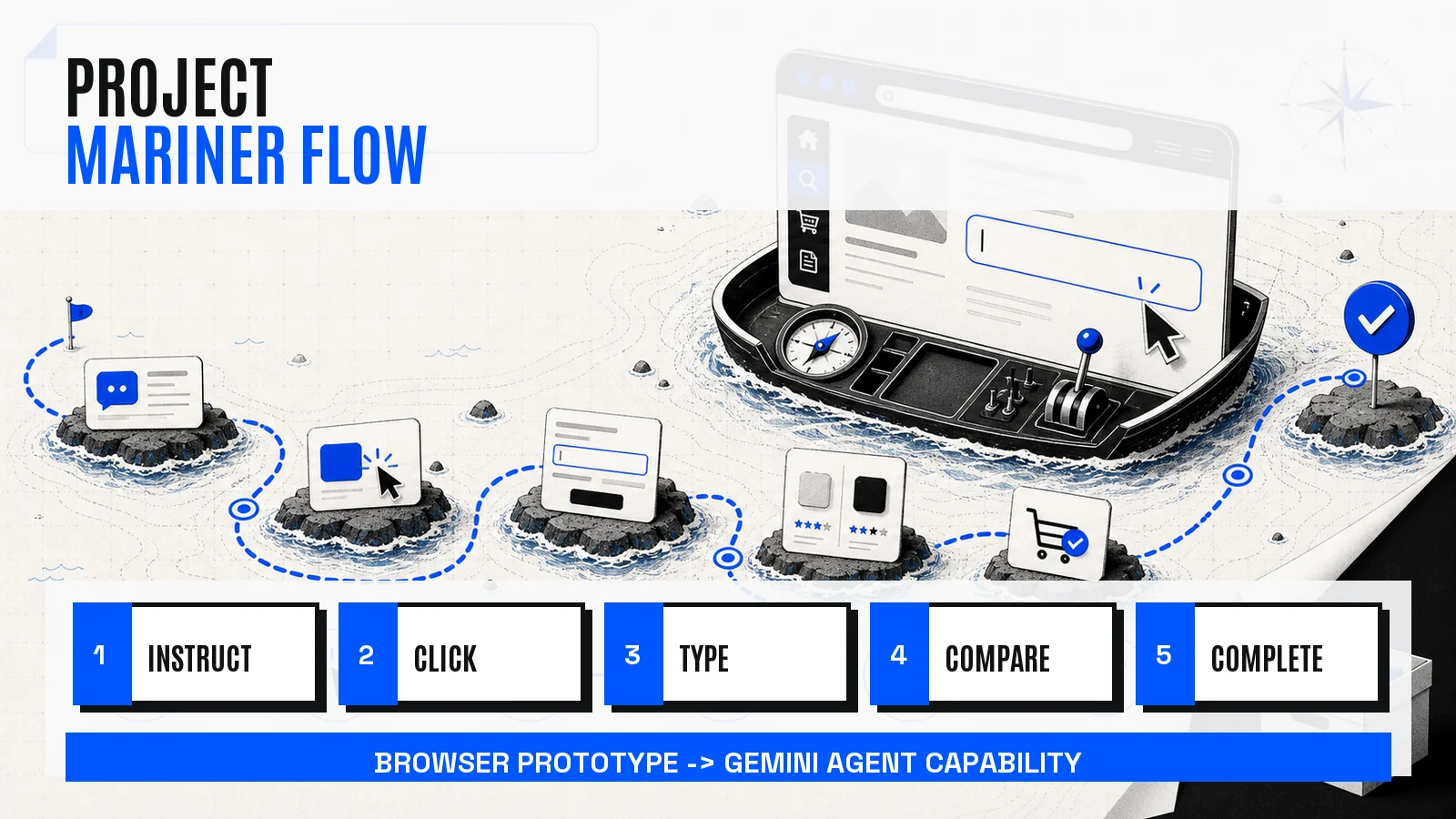
Project Mariner was a research prototype from Google DeepMind: an AI agent that operated a web browser on your behalf. You gave it a goal, and it navigated to sites, read the page, clicked elements, and filled in forms to get the job done.
The idea was an agent that works the open web the way you do, instead of needing a custom integration for every site. A classic example: “find the best-priced flight to Chicago next Tuesday and start the booking.”
What it could do
Mariner’s headline trick was doing several things at once.
It ran as a system of agents that could handle up to around ten tasks in parallel, looking up information, making bookings, buying things, and doing research at the same time. You set the goals, it juggled the steps.
It was always an experiment, gated to testers rather than shipped to everyone, which matters for understanding why it changed shape.
Why Google shut it down, and where it went
According to reporting, Google retired Project Mariner as a standalone product in 2026 and moved its technology into other Google products, including the main Gemini agent line.
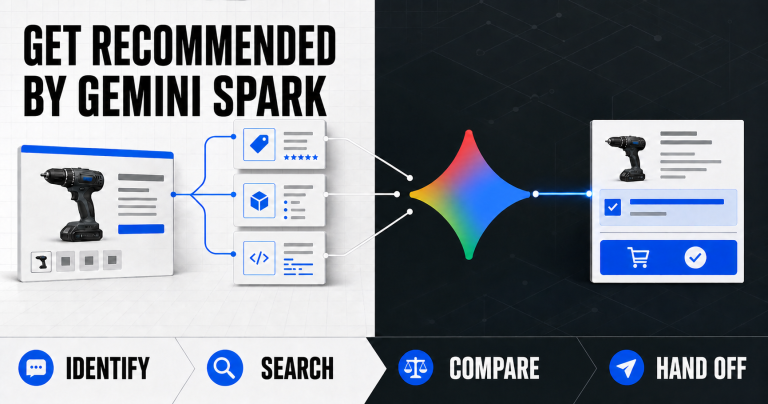
That fits what showed up at I/O 2026. The browser-agent capability Mariner pioneered now lives inside Google’s consumer agents, like the always-on Gemini Spark and the agentic features in Search and shopping.
So Mariner is less a cancelled product than a prototype that graduated. The demos became features.
What it means for you
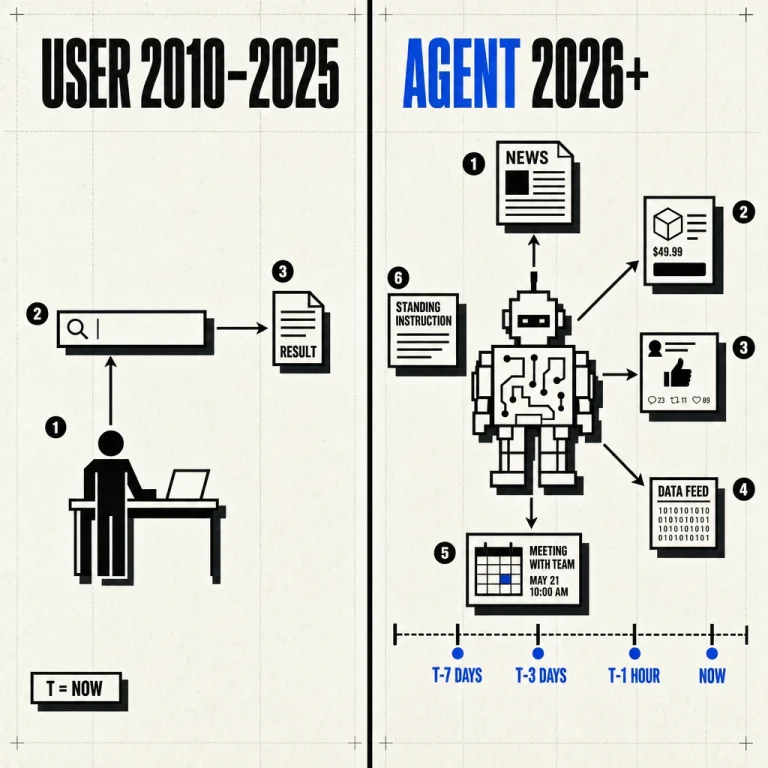
The lesson for a business is not about one product name. It is that browser agents are moving from experiment to everyday.
When an agent can read and operate your site the way a person does, the question becomes whether your site is something it can actually use. Pages that load their content in ways an agent cannot read, or actions buried in custom interfaces, are where these agents stumble.
That is the same readability work that helps AI cite you, now pointed at agents that act. You can check how an AI reads your pages with the AI Summary Preview, and whether an agent can use your site with the Agentic Readiness Check.
The bigger picture
Mariner is one thread in Google’s wider shift to agents that do things, not just answer. For the full set of what Google launched, see Google I/O 2026: What Its AI Agents Actually Do.
FAQ
Project Mariner looked like a science project, and in a sense it was. Its job was to prove the browser agent could work, and once it did, the technology moved into the products people actually use.
The takeaway is to get ahead of agents that act. To see whether your site is ready for one, run the Agentic Readiness Check.
See what ChatGPT is really searching
SubSeed captures the hidden Google queries ChatGPT runs behind every answer and enriches them with search volume, CPC, and keyword difficulty.
Related Posts
Read this post with an assistant
This is the whole prompt each button sends. Nothing hidden in it.
Read https://gridlok.co/blog/project-mariner/ and give me the main points in a few sentences.
Make Gridlok a Preferred Source on Google
See Gridlok surfaced more often in your Top Stories, AI Overviews, and AI Mode. One click, applied across Google Search.