Agentic SEO: How to Optimize for AI Agents That Search and Buy
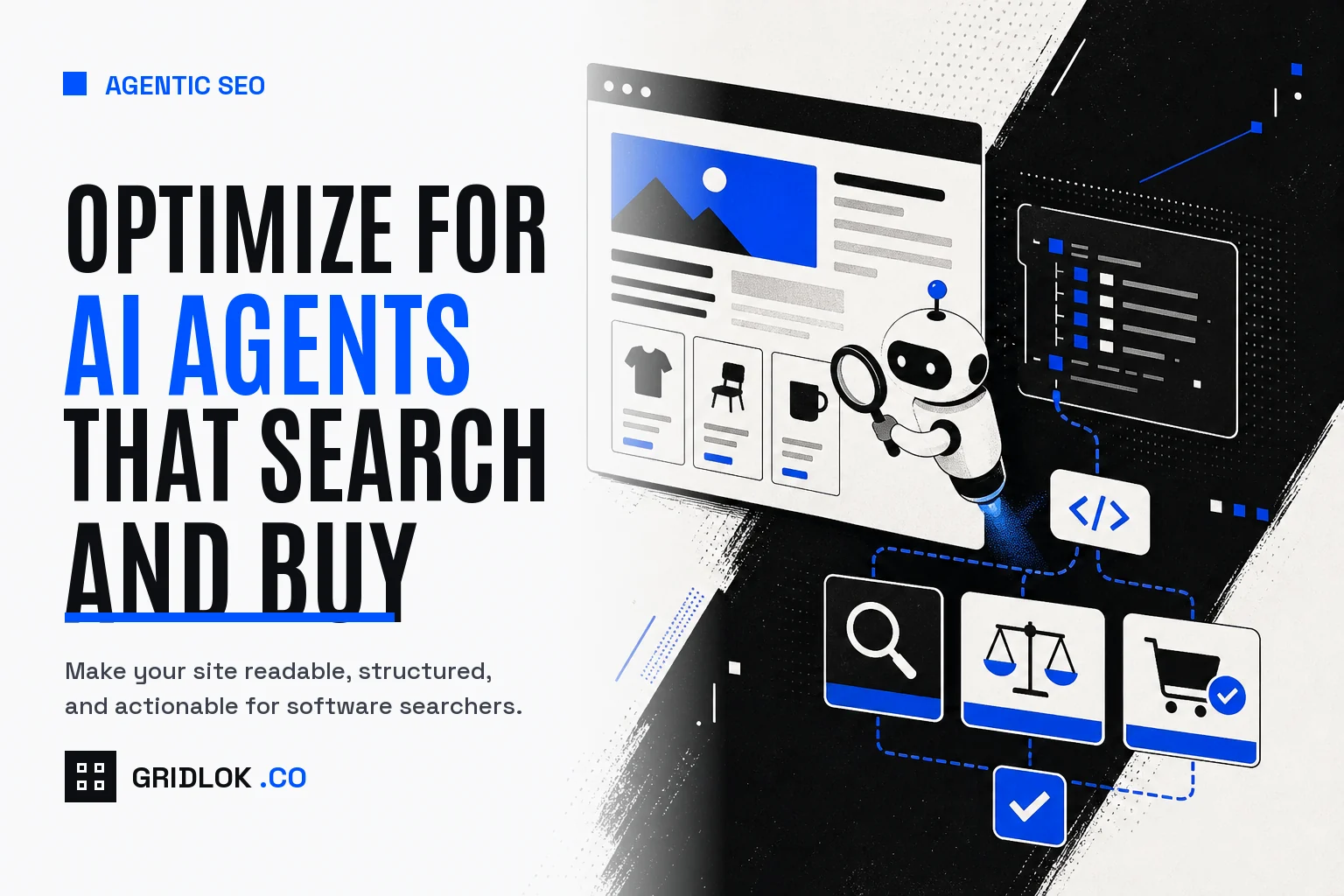
Agentic SEO is a new label for a real change: more of the searching, comparing, and buying is being done by AI agents, not people, and your site has to work for both.
It builds on SEO rather than replacing it. The same foundations matter, plus a few new ones aimed at software that acts.
Here is what changes when an agent is the one doing the searching, and the practical steps to stay visible.
Key takeaways
- Agentic SEO means optimizing so AI agents can find your content, read it correctly, and act on it, not just so people can.
- It builds on regular SEO. Clean structure, fast pages, and accurate structured data still do most of the work.
- Agents reward machine-readability: content in real text, explicit facts in schema, and clear actions.
- When an agent buys or books, being the source it picks matters more than ranking a page a human scrolls.
- You can test it. Tools now show how an AI reads a page and whether an agent could use your site.
What is agentic SEO?
Agentic SEO is optimizing your website for AI agents that search, compare, and take action, alongside the human visitors you already optimize for.
An agent does not skim a page the way a person does. It reads the underlying content and data, decides whether you answer the goal it was given, and either uses you or moves on. Agentic SEO is making sure that when it reads you, it can understand and act.
What changes when an agent does the searching
A human is forgiving. They will scroll past a slow load, decode a clever headline, and dig for a price. An agent will not.
An agent works from what it can parse. If your key facts live inside an image, or your content only appears after heavy scripting it does not run, or your price is buried three clicks deep, the agent may skip you for a source it can read cleanly.
And when the agent acts, books, buys, shortlists, the question stops being where you rank on a page and becomes whether you are the option it chose.
What stays the same
The reassuring part: most of agentic SEO is good SEO you may already do.
Clear site structure, fast pages, descriptive headings, accurate content, and real expertise still carry most of the weight. Agents are built on top of search, so the fundamentals that help you rank also help an agent trust you. You are adding to the foundation, not tearing it up.
How to optimize for AI agents
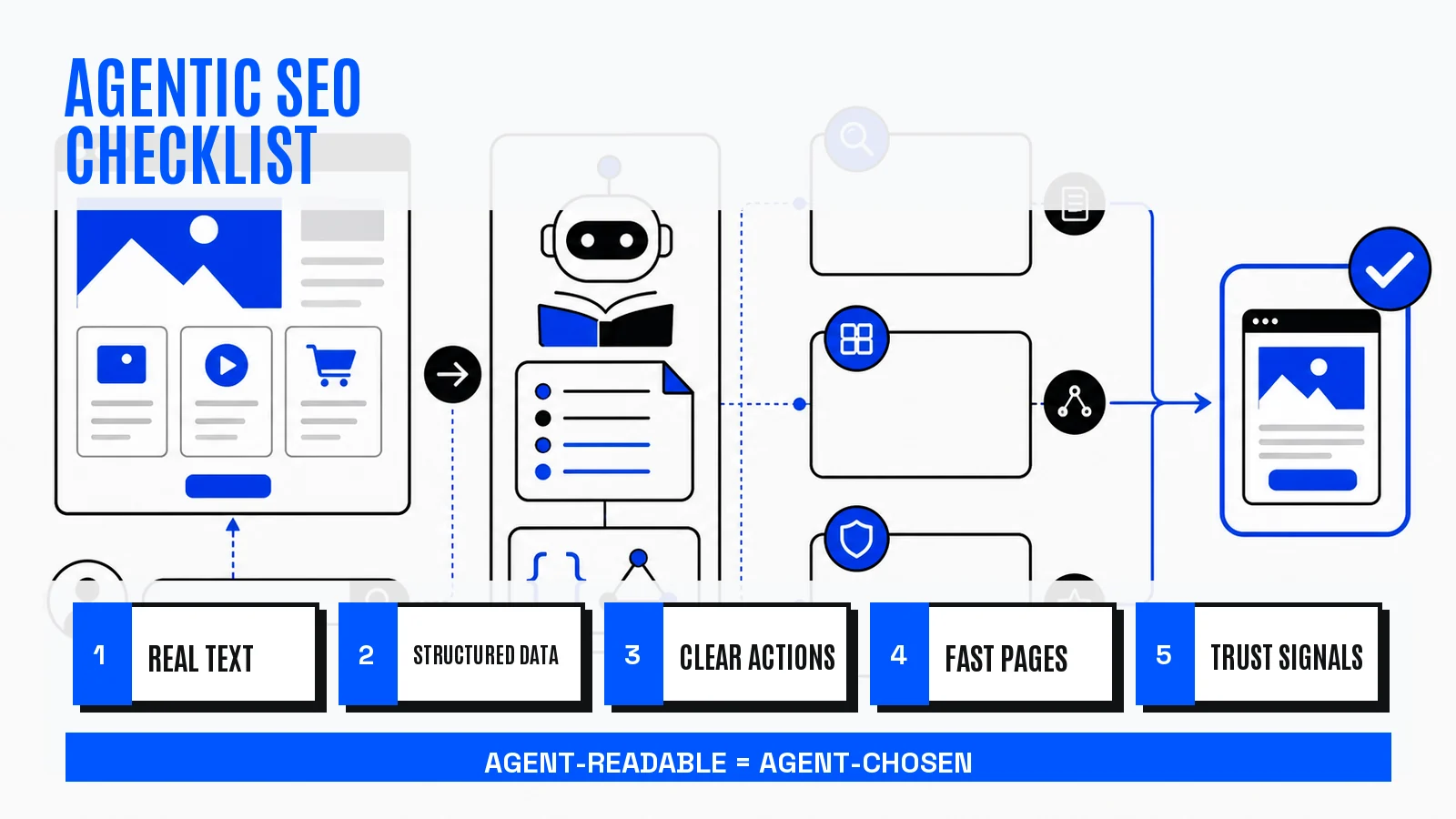
- Put your important facts in real text. Prices, specs, hours, and answers should be readable without running scripts or opening an image.
- Use structured data to state facts plainly. Product, FAQ, LocalBusiness, and Organization schema tell an agent what is true without guessing.
- Answer the question directly, near the top. Lead a section with a clear, short answer, then expand. Agents and AI Overviews both favor it.
- Keep actions simple and reachable. Booking, buying, and contact should not be buried in a custom interface an agent cannot operate.
- Keep it accurate and current. A wrong price or stale hours gets you dropped, by agents and people alike.
- Test how an AI reads you. Use the AI Summary Preview to see what an AI takes from a page, and the Agentic Readiness Check to see whether an agent can use your site.
Agentic SEO and AEO are the same fight
If this sounds like Answer Engine Optimization, that is because it is the same work pointed at a new actor. Getting cited by ChatGPT and getting used by an agent both come down to being readable, accurate, and clearly the best answer.
I wrote about that overlap in why AEO is mostly SEO with new labels. Agentic SEO is the same idea, extended to agents that take action on what they read.
The bigger picture
Agents are arriving fast, from shopping assistants to Google’s always-on Gemini Spark. For the full picture of what Google launched and why it matters, see Google I/O 2026: What Its AI Agents Actually Do.
FAQ
Agentic SEO is the same craft you already know, readable content, accurate data, real expertise, aimed at a new reader that happens to be software that acts.
Do the foundations well and you serve both the human and the agent. To see where your site stands with agents today, start with the Agentic Readiness Check.
See what ChatGPT is really searching
SubSeed captures the hidden Google queries ChatGPT runs behind every answer and enriches them with search volume, CPC, and keyword difficulty.
Related Posts

Read this post with an assistant
This is the whole prompt each button sends. Nothing hidden in it.
Read https://gridlok.co/blog/agentic-seo/ and give me the main points in a few sentences.
Make Gridlok a Preferred Source on Google
See Gridlok surfaced more often in your Top Stories, AI Overviews, and AI Mode. One click, applied across Google Search.