Generative Engine Optimization: What Changes Now That AI Agents Cost $20
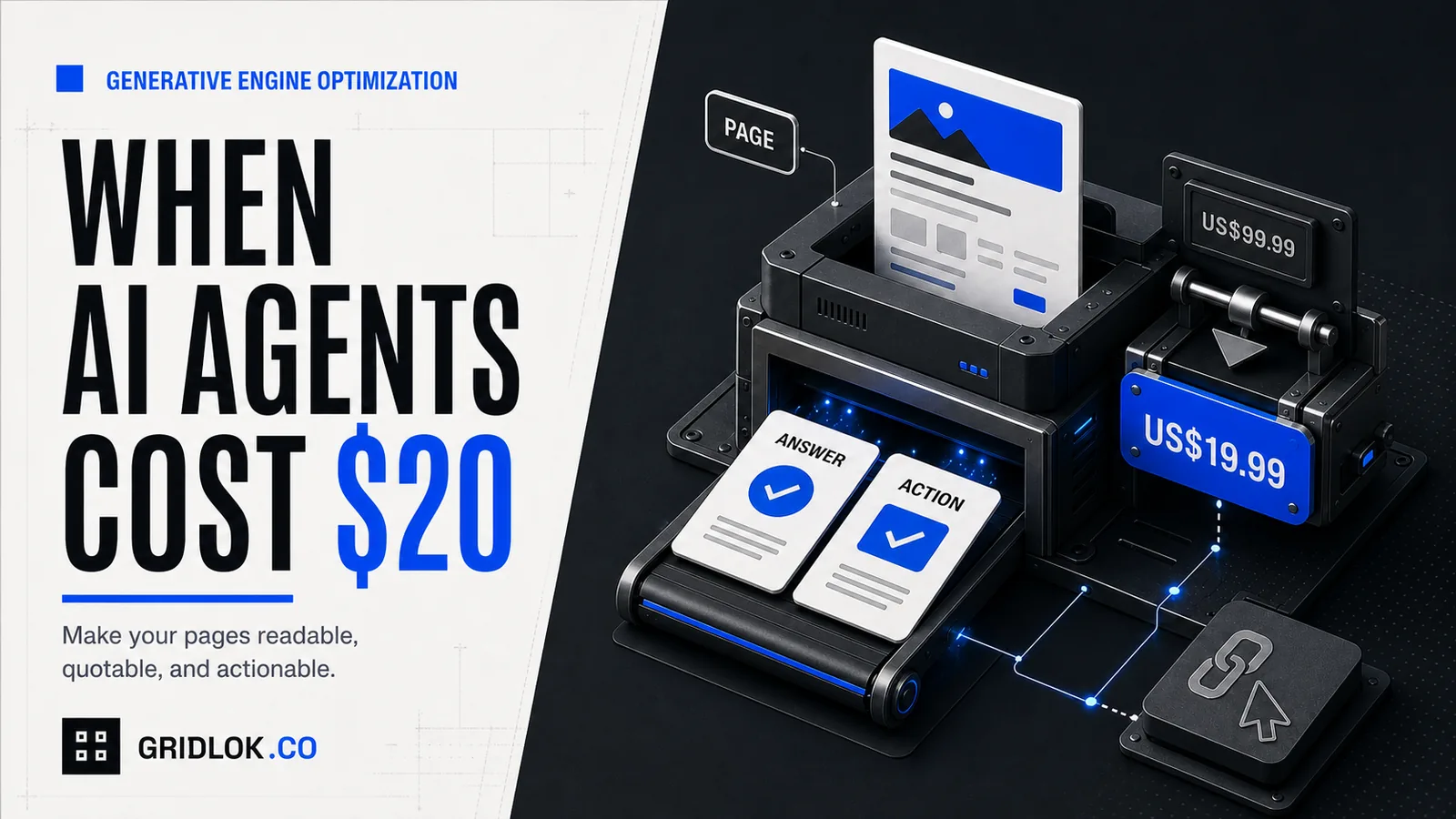
Generative engine optimization is the work of making your site readable by the systems that answer for people instead of sending them to you. The goal is getting your content used when someone else writes the answer.
In late July, Google dropped Gemini Spark from $99.99 a month to $19.99. That’s when this stops being theoretical.
Key takeaways
- Generative engine optimization means getting your content used inside an AI-generated answer, which is a different job from ranking a page.
- Gemini Spark went from a $99.99 Ultra feature to a $19.99 Pro feature in July 2026, so the number of people with an always-on agent just multiplied.
- Most of the work is plumbing. A direct answer near the top, clean headings, real text instead of text baked into images, and actions a machine can complete.
- It doesn’t replace SEO. The same page qualities that help a model quote you are the ones that helped you rank, which is why most of this is familiar.
What is generative engine optimization?
Generative engine optimization, usually shortened to GEO, is optimizing for systems that generate an answer rather than return a list of links. AI Overviews, ChatGPT, Gemini, Perplexity, and now agents that go and do things on someone’s behalf.
The practical difference is where you get paid. In search, you win by being the link someone clicks. In a generated answer, you win by being the source the model draws on, and you might never get the click at all.
You’ll also see this called answer engine optimization, and the two terms mean roughly the same thing. I’ve argued before that most of it is SEO with new acronyms, and I still think that’s right about the work. The acronym churn is marketing. The underlying shift is real.
The price drop did more than the launch
Gemini Spark launched in May 2026 on Google AI Ultra at $99.99 a month. At that price it was a demo. Almost nobody’s customers were using it.
In late July it came to Google AI Pro at $19.99. Same product, a fifth of the price, and $19.99 is what people already pay for a streaming bundle. I wrote up what Spark actually does when it launched, and the short version is that it runs in the background, connects to your apps, and checks in before it does anything big.
Some limits still apply. It’s US-only right now, it needs Keep Activity switched on, and Google has ruled out the EEA, the UK, Switzerland and Nigeria. Free, work and school accounts don’t get it. So this isn’t everybody yet.
But the direction is one way. Every one of these tools has moved down in price, never up, and the agent doesn’t browse the way a person does. It reads.
What an agent actually needs from your page
An agent lands on your page with a job to finish. It has no patience, no scroll behavior, and no ability to infer what you meant from a layout. It either finds the thing or moves to the next site.
The answer near the top, in words
If your page answers a question, answer it in the first sentence or two under the heading. Models pull short passages that stand on their own. A paragraph that only makes sense after the three above it is a paragraph that won’t get quoted.
Real text, not text inside pictures
Prices in an image, hours in a graphic, specs in a PDF screenshot. All invisible. This is the most common thing I find on client sites and it’s usually a theme decision nobody revisited.
Headings that describe the content
A heading is how a model finds the section that answers the question. “Pricing” beats “Our Approach.” A heading phrased the way someone would ask beats both.
Actions a machine can take
If an agent is booking or buying, it needs structured data and a form it can actually complete. That’s where the agent payment protocols come in, and it’s the part most sites haven’t touched.
How to check your own site
Take one page that matters and read it the way a machine would. Strip the design out of your head and ask whether the answer is in the text, near the top, in a section a model could lift on its own.
Then ask the assistants directly. Put your main question into ChatGPT, Gemini and Claude and see who gets cited. Checking one tool only samples a minority of the market.
The questions to test are the ones customers actually ask, in their words. Your Search Console query report and your own inbox are better sources for that than any keyword tool, which is the argument in stop guessing how customers search.
Where the hype outruns the evidence
Two things get oversold. There’s no ranking factor for generative engines, so anyone selling a GEO score made the number up. And AI tools are still a small share of activity next to search, around 1.83% of US desktop activity against traditional search at 10.52%.
So it’s growing fast and it’s still small, and the work overlaps almost entirely with good SEO. If someone tells you to rebuild your site for agents this quarter, check what they’re selling. I went through why the data disagrees with the Google is dying story, and this quarter didn’t change it.
What did change is the price of entry for the person on the other end. That’s reason enough to look at your top few pages this month.
FAQ
Generative engine optimization is a new name for making your content easy to read and easy to lift. The reason to care this month rather than next year is that the tool doing the reading just got cheap enough for your customers to own one.
Sources
- Google One benefit restrictions, on Gemini Spark eligibility, the Keep Activity requirement, and usage limits. support.google.com/googleone
- 9to5Google, “Gemini Spark rolling out to Google AI Pro users in the US” (July 2026), on the move from the $99.99 Ultra tier to the $19.99 Pro tier. 9to5google.com
- Datos (a Semrush company), “State of Search Q2 2026,” on AI tools at 1.83% of US desktop activity against traditional search at 10.52%. datos.live
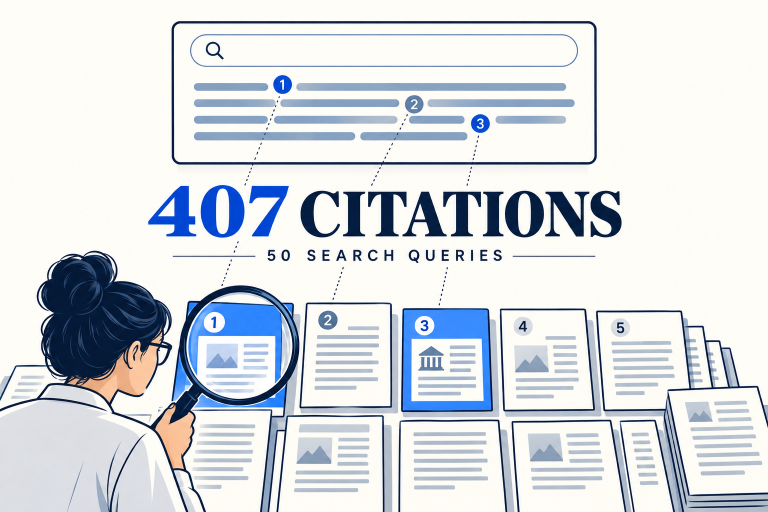
See what ChatGPT is really searching
SubSeed captures the hidden Google queries ChatGPT runs behind every answer and enriches them with search volume, CPC, and keyword difficulty.
Related Posts
Read this post with an assistant
This is the whole prompt each button sends. Nothing hidden in it.
Read https://gridlok.co/blog/generative-engine-optimization/ and give me the main points in a few sentences.
Make Gridlok a Preferred Source on Google
See Gridlok surfaced more often in your Top Stories, AI Overviews, and AI Mode. One click, applied across Google Search.